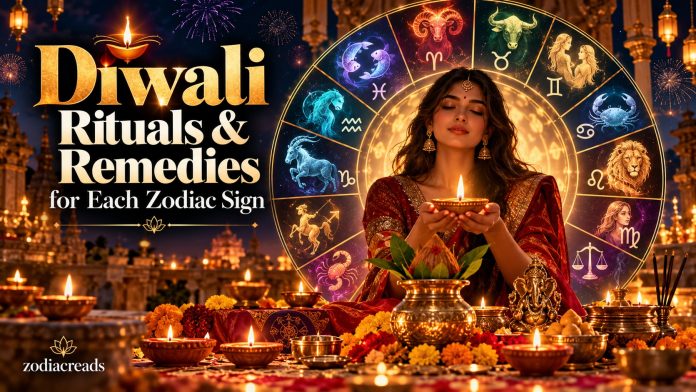
Diwali 2026 rituals and remedies for each zodiac sign
Diwali 2026 lands in a familiar ritual frame: Lakshmi Puja the worship of Lakshmi the goddess of wealth is the ritual focus for most households. Regional practice varies some families emphasise Kali or Govardhan Puja others concentrate on lights and family meals but searches for Diwali 2026 will largely be about Lakshmi Puja timing simple practices and sign-specific suggestions.
Astrologically note that you should include exact planetary placements only if the Diwali chart is computed. If you quote a degree give the source of calculation. If no chart is used say what tends to be emphasised rather than assert fixed outcomes. A placement inclines it does not decide and remedies here are modest practices not guarantees.
Quick context: what Diwali 2026 actually emphasizes
Diwali 2026 emphasises household renewal and abundance rituals in most communities with Lakshmi Puja at the centre for many. Note that regional preference shifts the ritual focus: eastern households may prioritise Kali Puja while some Vaishnava families mark Govardhan Puja. State the local tradition rather than assuming one practice applies to everyone.
If you plan to mention transits for Diwali 2026 compute the chart first. Without a chart describe tendencies: for example a heavy Venus presence classically reads as attention on comfort and domestic aesthetics.
Keep the interpretive voice hedged. Tell readers that a placement inclines or is associated with certain moods and events and avoid language that suggests Diwali rituals will fix fate. Remedies here are practical supports not promises.
Timing and muhurta: what to check before you start
Before you plan Lakshmi Puja check the local Lakshmi Puja muhurta for your town. If you include exact times list the start and end of the muhurta the timezone and the source of calculation (for example: Swiss Ephemeris via NOAA or the software and house system you used). Readers want a clear time and the basis for it.
On house timing prioritise cleaning and decluttering earlier in the day light diyas at dusk or the start of the muhurta according to local custom and place donations or charity after your puja or during the auspicious muhurta. Phrase this as a tendency: many traditions place cleaning in the morning and lighting in the evening.
If you quote a planetary degree for Diwali 2026 include the exact degree sign minute and your calculation source. That keeps the chart computation precise and the interpretation traditional.
- List start and end of Lakshmi Puja muhurta with timezone
- Name the ephemeris or software used for exact degrees
- Recommend cleaning in morning lighting at dusk/muhurta donations during puja
Diwali rituals for each zodiac sign (writer checklist)
Aries (Mesha). Aries tends to favour bold physical actions. Ritual: light a strong ghee diya at the northeast corner of the main room. Offering/colour: red flowers or red cloth. Mantra/phrase: ‘Om Shri Lakshmyai Namah’ said three times with attention. Caution: Aries energy can rush rituals so slow one step and tidy the altar after to ground the impulse.
Taurus (Vrishabha). Taurus tends to prefer comfort and sensory detail. Ritual: set a small plate of freshly cooked sweet rice on the altar. Offering/colour: yellow marigold or saffron cloth. Mantra/phrase: ‘Om Shreem Hreem Kleem’ softly twice. Caution: Taurus May cling to excess keep the offering modest and distribute extras to guests.
Gemini (Mithuna). Gemini tends to lean toward communication and variety. Ritual: write a short gratitude list and read it aloud before the puja. Offering/colour: mixed seasonal fruits bright orange. Mantra/phrase: a short line ‘Om Lakshmi Namah’ repeated to focus. Caution: Gemini can get distracted set a single intention first.
Cancer (Karka). Cancer tends to centre family and domestic memory. Ritual: place a family photo near the diya and invite elders to touch the offering. Offering/colour: white jasmine or silver-coloured cloth. Mantra/phrase: ‘Om Shreem’ said with feeling. Caution: Cancer may sentimentalise keep the altar practical and avoid clinging to old grievances.
Leo (Simha). Leo tends to favour ceremony and visible offerings. Ritual: light multiple small lamps in a line by the doorway. Offering/colour: red or gold fabrics. Mantra/phrase: ‘Om Hreem Shreem’ with a clear voice. Caution: Leo can over-perform share the spotlight and offer a lamp for someone quieter.
Virgo (Kanya). Virgo tends to prefer exactness and helpfulness. Ritual: clean and label small puja items then arrange them symmetrically. Offering/colour: green leaves or light green cloth. Mantra/phrase: ‘Om Lakshmi Vidmahe’ slowly. Caution: Virgo May nitpick let the ritual be simple rather than perfect.
Libra (Tula). Libra tends to seek balance and beauty. Ritual: adorn the doorway with symmetrical rangoli and two lamps. Offering/colour: pastel pinks or light blue. Mantra/phrase: ‘Om Shreem Namah’ chanted to steady breathing. Caution: Libra can delay decisions set a start time and keep to it.
Scorpio (Vrishchika). Scorpio tends to go deep and private. Ritual: sit in quiet meditation before lighting a single deep-burning diya. Offering/colour: dark red flowers or black-edged cloth. Mantra/phrase: ‘Om Hreem’ whispered three times. Caution: Scorpio May read too intensely into omens keep interpretations practical.
Sagittarius (Dhanu). Sagittarius tends to favour openness and hope. Ritual: hang a small new cloth near the puja space as a symbol of fresh intention. Offering/colour: purple or royal blue. Mantra/phrase: ‘Om Shreem Hreem Namah’ once with warmth. Caution: Sagittarius can promise too much choose one realistic intention.
Capricorn (Makara). Capricorn tends to value structure and long-term planning. Ritual: write a modest financial intention and tuck it under the diya. Offering/colour: brown or dark grey fabric. Mantra/phrase: ‘Om Lakshmiyei Namah’ with steady rhythm. Caution: Capricorn May over-plan allow some ease and hospitality.
Aquarius (Kumbha). Aquarius tends to prefer unconventional or collective acts. Ritual: donate time or a small gift to a local community group and place a note on the altar. Offering/colour: electric blue or turquoise. Mantra/phrase: ‘Om Shreem’ as a short communal chant. Caution: Aquarius can intellectualise ritual include a simple felt act.
Pisces (Meena). Pisces tends to favour devotion and imagery. Ritual: set a small bowl of water with a few floating flowers by the lamp. Offering/colour: sea-green or soft white. Mantra/phrase: ‘Om Hreem Shreem’ softly while breathing. Caution: Pisces can escape into fantasy ground the practice with a concrete aftercare step like clearing the altar offerings.
House-focused remedies and why they matter this Diwali
Think of Diwali 2026 as a day to make your shared spaces work a little better. The small housekeeping actions below tend to reframe household energy and routines rather than act as literal magic.
Entrance: clear a narrow path to the door sweep away shoes and clutter and place a small tray for keys and mail. A tidy threshold helps people enter the home with less friction which classically supports guests and small daily wins.
Kitchen: wipe counters put perishables away and clean the stove top. The kitchen is where routines start for most families. A quick visible tidy signals that cooking and sharing food will be easier over the next few weeks.
Puja corner: dust the idols replace old flowers with fresh ones and move any broken items out of sight. If you have a photograph or deity image make a small clear surface for it. The action of care matters more than elaborate setup.
Lamp placement: place diyas or lamps near the entrance by windows and along main walkways inside. If you live in a small flat stagger three small lights rather than a single large cluster. For safety use glass holders or an electric diya where open flame is risky.
Donation and seva: give food clothing or time to a local shelter or hand a meal to a neighbour. This tends to shift household priorities toward sharing and reduces seasonal stress rather than erasing misfortune. Practical giving also helps redistribute excess during a high-consumption festival.
Accessible alternatives: if you can’t perform a full puja light one diya mindfully and spend five minutes in quiet. Play a recorded mantra softly while you clean or offer a plate of home-cooked food to a neighbour. These scaled actions keep Diwali meaningful when time or space is limited.
Mantras materials and mantric cautions
Short sign-appropriate mantra ideas provided as single-line transliterations. Repeat them slowly and mindfully the practice tends to steady attention rather than guarantee any outcome.
Aries Leo Sagittarius: Om Namah Shivaya. Taurus Virgo Capricorn: Om Sri Ganeshaya Namah. Gemini Libra Aquarius: Om Aim Hrim Klim Chamundaye Viche. Cancer Scorpio Pisces: Om Shreem Hreem Kleem Mahalakshmiyei Namah.
Safe material substitutions: vegetarian offerings only such as fruit cooked rice and sweets. If an open flame is unsafe or prohibited use an electric diya or an LED lamp the Sanskrit term is diya lamp. Offerings are called naivedya food offering. Using clean simple items keeps the ritual accessible.
Mantric cautions: avoid buying expensive ‘cures’ that promise quick fixes. A bought talisman rarely substitutes for a considered practice and cultural context matters wearing certain symbols may be appropriate only after instruction from a trusted elder or practitioner.
Practical ritual tips: speak the Sanskrit term first then its meaning once. For example Gayatri mantra a solar prayer. If you choose a recorded mantra check that the recording credits a known chanter or temple. Mindful repetition is the point not volume or speed.
- Use naivedya rather than complicated ingredient lists
- Electric diyas are acceptable when safety or regulations forbid flame
- Repeat short mantras slowly for several minutes rather than racing through many
- Don’t buy costly ‘Diwali cures’ ask an elder before wearing ritual jewelry
- Recorded mantras are fine if they come from a known source or temple
After Diwali: small follow-ups that tend to help
A week after Diwali take two practical steps: update financial records and schedule a decluttering day. Updating records means reconciling receipts noting any gifts or donations and making a simple list of changed items so you don’t lose track of new purchases or gifts.
Set aside a specific day within seven to ten days to declutter one zone not the whole house. Decluttering after the festival helps keep the energy you invited from getting overwhelmed by mess. If you prefer smaller tasks clear a drawer or a single shelf and note how that shift felt.
Keep a short journal of intentions you offered during Lakshmi Puja or the small wishes you spoke aloud while lighting diyas. Within a week review that list and mark one practical next step for each intention such as emailing a contact scheduling a follow-up or setting a reminder.
Decide whether to repeat simple practices and how often. Lighting a weekly lamp tends to maintain ritual continuity a monthly donation to a local food bank or temple often keeps the outward expression of gratitude active. Frame these as tendencies not guaranteed outcomes: regular small actions usually help momentum but they don’t promise any specific result.
Notice what felt authentic in your household ritual and keep those pieces for next year. Maybe a specific song the order you offered sweets or the way family members took turns lighting diyas felt right. Treat these as household preferences rather than spiritual rules.
- Update financial records and note festival-related expenses within a week.
- Schedule a single decluttering task in the first 7–10 days repeat monthly if it helps.
- Journal intentions spoken at Puja and pick one concrete follow-up for each.
- Choose a repeat cadence for small practices: weekly lamp monthly donation or quarterly cleaning.
Regional notes and variations to include
North Indian Lakshmi Puja focus: many North Indian households centre the evening around Lakshmi Puja offering sweets silver and account books (bahi khata) for blessings on wealth and business. The emphasis is hospitality new-account blessings and a formal prayers sequence.
South Indian oil-lamp traditions: in several South Indian customs lighting long brass oil lamps (kuthu vilakku) at dusk is central. The physical arrangement of multiple lamps on a brass stand and family members taking turns to add oil and wick is a common emphasis alongside kolam floor rice-paste designs at the entrance.
Western and diasporic adaptations: families outside India often combine regional elements with local practices like midday gatherings vegetarian potlucks or simplified evening puja for practical timing. These versions keep the festival’s social and symbolic aims while adapting to work and school schedules.
Regional customs in eastern and western India: in Bengal Kali puja is often observed close to Diwali with lamp offerings focused on Kali or local deities while in Gujarat house-cleaning rangoli and community fireworks play a larger communal role. Each of these customs highlights a different customary emphasis worship of a particular deity communal celebration or household ritual.
- Present regional customs as different emphases not hierarchies of correctness.
- Give factual descriptions: Lakshmi Puja in North India kuthu vilakku and kolam in South India Kali Puja in Bengal communal rangoli in Gujarat.
- Note diasporic adaptations that merge practical timing with tradition.
Keep the parts that felt honest for your family and leave the rest. Small repeatable follow-ups tend to matter more than elaborate one-off efforts.
If a practice felt useful put it on the calendar. If it didn’t let it go. That’s how a tradition becomes yours.
Frequently asked questions
Do I have to perform Lakshmi Puja on Diwali 2026?
No. Lakshmi Puja is a common practice but you can choose smaller offerings or focus on family rituals the tradition tends to emphasise gratitude and household upkeep.
What time should I light diyas on Diwali 2026?
Check your local Lakshmi Puja muhurta for exact times if you can’t lighting diyas after sunset in the main entrance or puja corner is a culturally common option.
Can a simple diy ritual be as effective as a full puja?
Yes. Simple actions like lighting a ghee or oil lamp and offering fresh flowers tend to carry the same intentional emphasis for many households.
Are there sign-specific mantras I should use?
You can pick short sign-appropriate mantras suggested in the article but treat them as supportive practices rather than guaranteed fixes.
Should I buy gemstones or talismans for Diwali?
Avoid impulse purchases gemstones are a long-term choice and should be selected with an astrologer if you want that route not as a last-minute ‘cure’.

