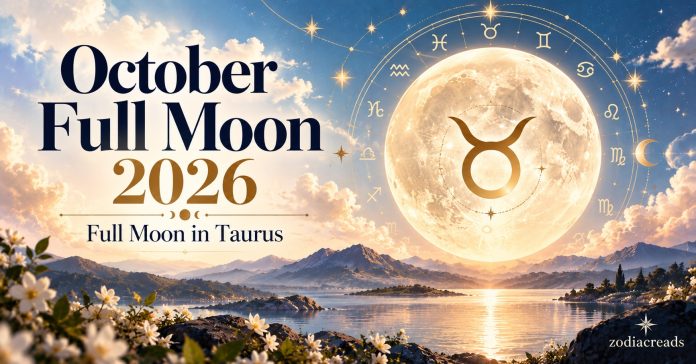
October full moon 2026 appears in the keyword here as October full moon 2026. This full moon has the Moon opposite the Sun, with a specific planet on the opposite side of the chart; check your computed chart to confirm which planet is opposite the Sun for that exact lunation and note the degree precisely.
When you write about classical meanings, name your sources, for example Brihat Parashara Hora Shastra or Phaladeepika, and keep interpretation hedged. State tendencies, not certainties, and avoid presenting chart factors as fate.
Record the Moon degree, nakshatra and any exact aspects with precise notation.
What the October full moon 2026 is, astrologically
At a full moon the Moon sits opposite the Sun. For October full moon 2026 you must state plainly which planet opposes the Sun in your chart; computational charts will show whether a slower planet like Saturn or a faster planet like Mars is closely involved. Confirm the planet and the exact degree when you calculate the chart rather than assuming a generic configuration.
Name sources when you quote classical claims. If you say a placement 'classically reads as' heightened emotion, cite a text such as Brihat Parashara Hora Shastra or relevant jyotiṣa sutras. Keep the language hedged: placements tend to incline a situation, they do not decide it.
Note Moon degree, nakshatra, and exact aspects using precise notation. These specifics let a reader check or reproduce your chart.
How to write the sign-by-sign ritual section
Each sign entry needs three items: a short tendency, one compact ritual paragraph, and a one-line journal prompt. Use second person present tense throughout: 'Your Moon sits in the 8th' style. Begin any Sanskrit term with the term then the gloss once, for example 'Purnima, full moon.'
Keep rituals short, inexpensive, and optional. Offer a symbolic option, a devotional option, and a practical option so readers with different beliefs can choose. Never invent a problem just to sell a remedy and never promise a fixed result. Phrase outcomes as inclinations, 'tends to calm', 'is associated with', or 'classically read as'.
Format each ritual as one paragraph. Give concrete actions and timings: a two-minute breath practice, lighting a lamp at dusk, writing for ten minutes. If a nakshatra or textual practice is referenced, name the source. End each sign entry with a one-line journal prompt.
Tone and language rules for the piece
Write precise, plainspoken lines. Use contractions and vary sentence openings. Avoid the list of banned phrases from the style guide. Short paragraphs are better than long ones. Keep Sanskrit proper nouns capitalised and include diacritics where appropriate.
Hedge your interpretations. Use phrases such as 'tends to', 'is associated with', and 'classically read as'. When a claim rests on textual tradition, name the source. Do not use absolute language like 'will' or 'must'.
Avoid fatalism and manufactured fear. Describe inclinations and options. Offer alternatives for symbolic, devotional, and practical readers. Keep instructions simple and inexpensive, and never present ritual as a cure or guarantee.
Aries, restless action orientation. Tends to quick decisions under bright emotion.
Tends to: Acts on gut energy, prefers immediate fixes over slow repair.
Ritual: Light one red beeswax candle with a small bowl of water and three tulsi leaves, for 15 minutes, ideally within six hours of exact Purnima; if you need a timed option, choose the evening before the exact full moon. Note: don’t invent astronomical times for your chart, use an ephemeris or your chart calculator.
Journal prompt: What one quick choice could use a gentler follow-through?
Taurus, steady comfort seeker. Tends to cling to what feels secure.
Tends to: Hold on to material and sensory comforts longer than you mean to.
Ritual: Place a small bowl of milk and two rose petals on a low table, sit for 20 minutes and breathe; perform within six hours of Purnima night or the morning after. Materials and timing echo North Indian Sharad Purnima customs, see our Sharad Purnima 2026 rituals for each sign for more.
Journal prompt: Which possession or routine are you protecting from necessary change?
Gemini, curious storyteller. Tends to scatter attention across many threads.
Tends to: Jump between ideas and conversations without finishing them.
Ritual: Write three short notes on different colored paper, fold and keep under your pillow for one full sleep cycle; do this within 6 hours of the full moon phase or the closest evening. Use a pen, not a keyboard, to anchor the habit physically.
Journal prompt: Which unfinished conversation would feel better if you ended it?
Cancer, protective nurturer. Tends to withdraw when emotionally exposed.
Tends to: Retreat to the familiar when feelings get intense.
Ritual: Fill a small bowl with sea salt and moonlit (or filtered) water, hold it for 10 minutes and then pour it slowly over your hands, within six hours of Purnima or at moonrise; this references coastal and folk Purnima bathing customs in parts of South Asia without claiming universal practice.
Journal prompt: What boundary would help you feel safer without isolating?
Leo, performance heart. Tends to seek visible appreciation.
Tends to: Measure warmth by applause and visible praise.
Ritual: Arrange three marigold flowers and a mirror, gaze for five minutes and name three things you did well this month; do this the night of the full moon or within six hours after exact Purnima. Keep materials simple and local, marigold is traditional in many South Asian Purnima observances.
Journal prompt: Where did you shine without being seen?
Virgo, detail-minded fixer. Tends to overwork small problems.
Tends to: Polish imperfections until progress stalls.
Ritual: Light a small white candle, list three practical next steps on a notecard, burn the card safely and bury the ashes or keep them in a jar for 24 hours; perform within six hours of the full moon or the morning after. This practical rite borrows the cleansing intent of some seasonal Purnima practices from temple traditions in India.
Journal prompt: Which tiny fix can you let go of for now?
Libra, relationship attuner. Tends to smooth at your own cost.
Tends to: Prioritize harmony even when it hides real needs.
Ritual: Place two tea lights spaced apart, speak one honest sentence to each light for 12 minutes total, extinguish them together within six hours of Purnima or during moonrise. The timing option respects Moon-centric observances around Purnima without prescribing exact local moon times.
Journal prompt: What truth would you say if you weren’t smoothing things over?
Scorpio, intense reflector. Tends to go deep and hold onto emotional truths.
Tends to: Sit with feelings others avoid, sometimes longer than needed.
Ritual: Place a black stone or onyx in moonlight for one night, touch it for 10 minutes within six hours of full moon peak or next evening; name one fear and one boundary aloud. Mention of placing stones in moonlight is found in folk practices across regions, not a single authoritative text.
Journal prompt: Which secret intensity wants clearer limits?
Sagittarius, wide-ranging seeker. Tends to promise more than you can keep.
Tends to: Commit to big plans before checking logistics.
Ritual: Tie a short red thread around your wrist or ankle, wear it for three days starting within six hours of Purnima night; while tying, state one realistic next step aloud. This echoes thread rituals seen in South Asian devotional contexts, referenced here only as cultural parallel.
Journal prompt: Which big idea needs a smaller, realistic first step?
Capricorn, disciplined builder. Tends to postpone emotional repair for work.
Tends to: Put tasks ahead of feelings until they pile up.
Ritual: Set a timer for 25 minutes and do a single unglamorous care task (dishes, file, call), then rest for 15; schedule this session within six hours of the full moon or the next morning. Practical rituals like this parallel domestic observances in some regional Purnima customs.
Journal prompt: Which neglected care task would ease your load most?
Aquarius, future-minded rebel. Tends to intellectualize feelings.
Tends to: Turn emotional material into theory to keep distance.
Ritual: Write a letter to a future self and seal it for three months, do this within six hours of Purnima or that same evening; use plain paper and a pen to keep it grounded. The practice mirrors modern Purnima-letter customs some communities use for reflection.
Journal prompt: What feeling do you keep explaining instead of feeling?
Pisces, imaginal empath. Tends to merge with others’ moods.
Tends to: Absorb atmospheres until your own edges blur.
Ritual: Play a five-minute slow melody, sit with a cup of warm milk or herbal tea, and breathe for 12 minutes within six hours of the full moon or at moonrise; the milk detail nods to Sharad Purnima milk offerings in parts of India, see our Sharad Purnima 2026 rituals for each sign for deeper context.
Journal prompt: Where did you lose your edge trying to help?
If your Moon or ascendant is a different sign
Sidebar: If your Moon or ascendant is in a sign other than your Sun, treat the sign block above as secondary. Your Moon or ascendant can change which ritual style or timing feels more relevant.
For precise chart decisions, especially about nakshatra timing or personal Purnima observances, consult a full chart reading rather than relying only on Sun-sign ritual suggestions.
Seo and meta guidance for October full moon 2026
Meta title draft, 50–60 chars: October full moon 2026 rituals and meaning for each sign.
Meta description draft, 120–155 chars: The October full moon 2026 (October Purnima 2026), sign-by-sign rituals, meanings, and gentle intentions you can try. Practical, optional steps for every zodiac.
Use the exact target keyword October full moon 2026 inside the first 100 words of the article body and in this heading. Keep the phrase natural: we recommend an opening sentence such as, "The October full moon 2026 brings a bright, public completion energy you can work with through small, sign-specific rituals."
Related keywords (6–10): October Purnima 2026, full moon rituals 2026, Moon in nakshatra 2026, sign-by-sign full moon rituals, Sharad Purnima vs full moon, October full moon rituals, full moon astrology 2026, Purnima rituals 2026.
- Place the keyword in the first paragraph and in one H2 exactly as written: October full moon 2026.
- Keep meta title under 60 characters and meta description under 160 characters.
- Use related keywords naturally across sign-by-sign ritual blurbs and the FAQs.
Fact-checking and legal/ethical notes
If the writer cannot compute the exact natal/transit chart now, flag it. Add a clear update step before publishing such as: "Update chart on publication day and confirm Moon degree, house, and nakshatra placements." We do not invent astronomical degrees or exact times.
Classical claims must be sourced. For nakshatra or classical Ayurvedic or ritual associations, cite primary or standard secondary texts where possible (for example, the Brihat Parāśara Hora Śāstra for many classical house and planet rules, or traditional nakshatra lists in classical jyotiṣa sources). If a claim is traditional rather than astronomical, label it as such: "classically read as" and name the source.
Avoid medical, legal, or financial advice. Ritual items we list are optional and symbolic only; do not present them as cures or guaranteed influencers of outcomes. We never sell panic or guaranteed remedies.
How we read charts: chart computation is exact, interpretation is traditional and interpretive. We calculate the Moon's position and house numerically, then read tendencies from classical texts and contemporary practice. The computation gives degrees and houses; the interpretation suggests tendencies, not certainties.
- Do not invent Moon degrees, rising signs, or exact transit times; flag for live update.
- Cite classical sources when making doctrine-like claims.
- List ritual items as optional and symbolic only; avoid promises.
Quick closing: double-check the Moon degree and nakshatra on publication day, then slot those specifics into the sign blurbs. Keep language hedged: placements tend to or are classically read as, rather than will or mean.
Final note: these last checks keep the piece precise in calculation and careful in interpretation, which is exactly how ZodiacReads reads charts.
Frequently asked questions
When is the October full moon 2026?
Check an exact ephemeris or calculate the chart for your location; the brief should instruct writers to verify the exact Purnima time rather than guess.
Should I do every ritual listed for my sign?
No, treat rituals as optional prompts; pick the ones that feel meaningful and safe for your situation.
Does this Full Moon cause major life changes?
A Full Moon tends to highlight emotions and culminations, but it inclines rather than decides; personal context and chart placements matter more.
Can I follow these rituals if my Moon sign is different from my sun sign?
Yes, consider adapting the ritual for your Moon or ascendant; include a sidebar telling readers when to prioritize Moon/ascendant over sun.
How should writers reference Hindu terms like Purnima or nakshatra?
Use the Sanskrit term first, then a short gloss once, and name sources or regional contexts when relevant.

